Traffic Master - Jam Buster
- 4.8
- Rating
- 500.00K
- Installs
- Free
- Price
 Analysis by App-foxy
I spent time with Traffic Master - Jam Buster as a quick puzzle game built around one simple problem: a crowded road that needs to be cleared by tapping vehicles in the right way. The idea is easy to understand almost immediately, but the better levels ask for more care than the bright, casual presentation first suggests. I found it most enjoyable in short sessions, especially when I wanted something more active than a traditional matching game but less demanding than a full strategy title.
It is a free puzzle game from Words Mobile, rated for Everyone. The game arrived on May 7, 2025, and the current version is 1.18. It runs on Android 6.0 and later, which makes it accessible to people using older compatible phones as well as newer devices. Its average rating is 4.8 from around 24 thousand ratings, and it has passed 100 thousand installs. Those figures suggest that the basic concept is connecting with a broad audience, although popularity alone does not tell you whether its tapping style will suit your hands, eyes, or patience.
How clearly the road puzzle communicates what to do
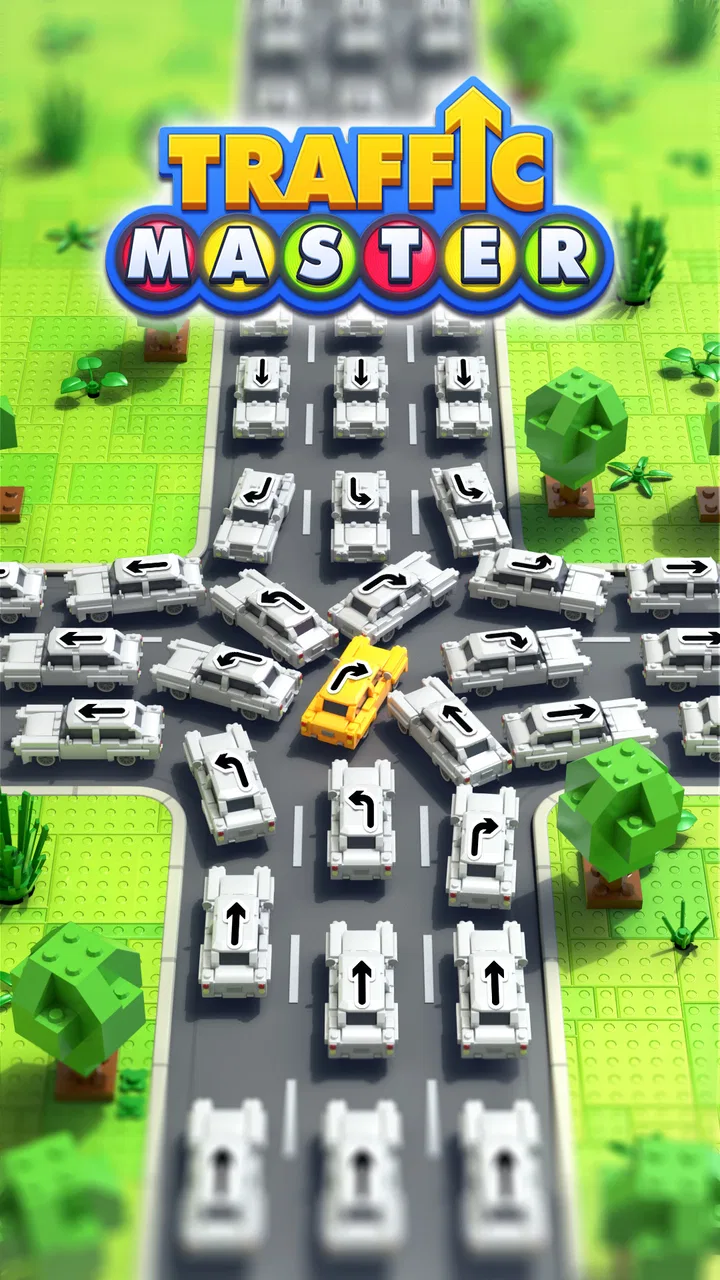
The strongest part of the experience is the immediate visual goal. You see a jammed roadway and need to make decisions by tapping vehicles so the traffic can move away. I did not need a long explanation before understanding the central task. That matters for a casual puzzle game: the first few moments should teach the interaction rather than bury it under menus and instructions.
You May Also Like

 Blood Strike: 2.5 Anniversary
Blood Strike’s Loadouts Turn Every Drop Into a Tactical Gamble
A close look at Blood Strike’s custom loadouts: how fast access to signature weapons reshapes its battle royale rhythm, rewards preparation, and narrows the gap between fights.

 Pandora - Music & Podcasts
Pandora’s Music Is Easy to Start, but Harder to Recover
Pandora’s strength is its low-effort path from a seed to a station. Its weak spot is how much confidence it asks you to place in connection, setup, and quiet recovery.

 8 Ball Pool
 Is Built on Rivalries, Rematches, and Routine
A close look at the rivalries, rematches, shared routines, and unanswered safety questions that turn a quick pool match into a persistent mobile community.

 Samsung Music
’s Quiet Strength Is Playing What You Already Own
Its reach comes less from spectacle than from dependable access to a personal library. That simplicity is both the app’s strongest retention engine and its ceiling.

 AccuWeather: Weather Radar
AccuWeather Review: A Quick, Clear Forecast for Everyday Decisions
For everyday plans, the best forecast is the one you can understand quickly. AccuWeather makes rain timing, radar, and local conditions easy to act on, with a few trade-offs.

 Hill Climb Racing
Why Hill Climb Racing Still Turns Crashes Into One More Run
A tiny car, a bumpy hill and one more upgrade: Hill Climb Racing keeps resurfacing because its simple chaos makes every near-miss feel personal.
More From Our News Desk
View All News


The road itself acts as the main navigation surface. Instead of moving through a complicated map or learning a large collection of symbols, I could focus on the arrangement of vehicles and the available paths. This makes the game approachable for someone who rarely plays puzzles. A friend could pick it up during a break and understand the premise without first learning a fictional world, a scoring system, or a set of character abilities.
That simplicity also creates an important readability trade-off. A busy traffic scene can communicate the challenge, but it can also make individual vehicles and their possible routes compete for attention. When several cars are close together, I found it better to pause and inspect the whole arrangement instead of immediately tapping the most obvious vehicle. The game rewards looking at the road as a group of connected spaces rather than treating every car as an isolated button.
For new players, my practical advice is to identify the vehicles that appear to have the clearest exit first, then check whether moving one of them will open a route for another. This is more reliable than tapping quickly from left to right. It also reduces accidental choices when the scene is visually crowded. The puzzle may look like a reflex challenge, but I got better results by treating each board as a small traffic plan.
The navigation is therefore friendly in concept, even if the visual density can become the real test. I would not describe the game as difficult to understand. I would describe it as easy to enter and occasionally demanding to read. That distinction is useful for players who are comfortable with simple rules but prefer uncluttered screens.
Why the one-touch idea works for short sessions
The tap-based structure gives the game a low commitment. I could play a little while waiting for an appointment, stop after a few puzzles, and return later without needing to remember a complicated storyline. This is a better fit for a phone than a puzzle that expects a long uninterrupted session. The road provides enough context to make each board feel like a small problem, while the controls keep the barrier to entry low.
Compared with match-three games, the appeal is different. There is less emphasis on spotting identical colors and creating combinations, and more emphasis on order, space, and consequences. Compared with word puzzles, it does not depend on vocabulary or spelling. Compared with physics-based puzzle games, it feels more direct because the main action is choosing where to tap rather than learning how objects react to a complicated control system.
That makes it a particularly reasonable choice for people who want a visual logic game without reading-heavy instructions. It is also useful for families looking for an Everyone-rated game with a premise that can be explained in one sentence. I would still supervise younger players in the same way I would with any game, not because the concept is difficult, but because the most suitable session length and pace depend on the child.
Motor and sensory considerations during play
The controls are appealing from a motor perspective because they are based on tapping rather than repeated swipes, virtual joysticks, or fast button combinations. Someone who finds multi-step controls tiring may prefer this format. The main physical challenge is precision: when vehicles are packed together, a tap needs to land on the intended object. Players with limited fine-motor control may find closely spaced traffic harder than the simple control scheme suggests.
I also noticed that the game asks for decision-making before action. That is helpful for players who do not enjoy rapid reactions, because the important skill is usually choosing the correct vehicle and timing rather than performing a long sequence of gestures. However, a slow and careful approach only helps if the board remains easy to inspect. When the screen feels crowded, the motor demand and the visual demand combine: a player must distinguish the target and then touch it accurately.
For a more comfortable session, I would hold the phone steadily and use the finger that gives the clearest view of the road rather than reaching across the screen. On a larger display, the separation between vehicles may feel easier to judge; on a small phone, rotating the device or changing grip may make the same puzzle less comfortable. I am not treating that as a guaranteed device-specific feature, but it is a real practical difference in how a tap puzzle can feel from one handset to another.
Sensory preferences matter too. The busy-road theme is visually active, and players who prefer calm, spacious puzzle boards may find it more tiring than a minimalist number or word game. If you are sensitive to visual clutter, I recommend playing in good lighting and taking a short pause when a board starts to blur into one mass of vehicles. The game is more enjoyable when I give myself time to separate the road, the cars, and the open routes.
For players with color-vision differences, I would pay attention to whether vehicle identity depends on color alone in the particular board being played. I would not assume that every distinction is equally clear for every person. The safest approach is to rely on position, shape, and the direction of available movement as well as color. That habit is useful for anyone, because a vehicle’s location and route are usually more important than its shade.
Who benefits from the slower, more deliberate approach
This game is a good match for people who enjoy visual planning but do not want a long tutorial. It can also suit players who like to solve one compact problem at a time. I found that the most satisfying moments came from resisting the first impulse and looking for the move that would create space later. That gives the tapping a small strategic layer without turning the game into a complex management simulation.
It is less suitable for someone seeking a strong audio-led experience, a story with substantial text, or a puzzle that can be played entirely through rapid reflexes. The central information is presented through the road scene, so anyone who cannot comfortably inspect small or crowded visual elements may face a meaningful barrier. In that situation, a word game with large text, an audio-centered title, or a puzzle with more spacious symbols could be a better choice.
Players who experience hand fatigue may appreciate that the game does not require constant dragging, but they should still watch for the cumulative effect of repeated taps. The control is simple, not necessarily effortless. I would use it in short bursts rather than assuming that a one-touch game is automatically comfortable for every session length.
Situational access in everyday use
The best everyday scenario for me was a short waiting period where I wanted something that could begin instantly and stop without preparation. I could look at a board, make a few decisions, and put the phone away when my turn came. That is where the game’s compact puzzle format makes sense. It does not ask me to remember a large narrative or arrange a long play session around it.
It can also work during a quiet commute as long as the phone is steady and the surroundings are not too distracting. Movement changes the practical experience: a vehicle scene that is easy to inspect at home may be harder to read while walking, standing in a crowded place, or dealing with bright reflections. For that reason, I would not recommend playing while moving through traffic or doing anything that requires attention away from the screen. The game is about clearing roads, but it should never compete with real-world road awareness.
In a shared environment, the visual nature of the puzzles is convenient because it does not require a long spoken exchange with the phone. On the other hand, a noisy place may make any sound-related feedback less useful, while a dim place can make a bright, busy board more tiring. The game’s suitability changes with the setting, so I would choose a stable seat and moderate lighting when I want to solve carefully rather than simply pass time.
The older operating-system requirement is another practical advantage. Android users do not necessarily need a recent phone to try it, since the minimum is Android 6.0. That broadens its usefulness for people who keep an older handset as a spare device or do not upgrade frequently. The game is free, which also lowers the initial commitment for someone who wants to test whether this style of visual puzzle is comfortable before spending money.
Free does not automatically mean frictionless. A player deciding whether to keep it installed should judge the experience by how comfortable the boards remain after the novelty of the traffic theme fades. If you want a game for occasional mental breaks, that may be enough. If you want deep progression, extensive customization, or a puzzle system that changes dramatically from one mode to another, this is probably not the right place to look.
A useful way to approach difficult traffic layouts
My most useful tactic was to separate the puzzle into three questions. First, which vehicle has an immediate, unobstructed path? Second, which move will create the most open space rather than merely remove one vehicle? Third, after that move, which remaining vehicle becomes the new priority? This prevents the common mistake of choosing a move because it looks available while ignoring the blockage it leaves behind.
I also found it helpful to avoid tapping during the moment I was still comparing two possible moves. In a puzzle built around traffic order, a premature action can turn a readable board into a confusing one. Taking a second to trace the intended route with my eyes was often more valuable than acting quickly. This is a small habit, but it changes the game from random tapping into deliberate planning.
Another useful trade-off is deciding when to accept a merely safe move instead of searching for the perfect one. If the board is becoming visually tiring, a conservative choice may preserve attention better than repeatedly scanning every vehicle. That will not satisfy players who want to optimize every puzzle, but it makes the game more manageable for casual sessions and for people who find prolonged visual concentration uncomfortable.
Remaining barriers and where another puzzle may win
The central limitation is that the same visual traffic jam that gives the game its identity can make it less comfortable for some players. A sparse number puzzle may be easier to read. A word game may be more suitable for someone who prefers large, distinct characters. A match-three game may feel more forgiving when the goal is to recognize patterns rather than calculate movement order. None of those alternatives offers exactly the same road-clearing idea, but each can be a better fit for a different ability or context.
I would also skip this game if you want a puzzle that mainly tests memory, language, or long-form deduction. Its appeal comes from spatial observation and the consequences of moving vehicles in sequence. If those skills are not enjoyable for you, the simple tapping will not compensate for the mismatch. Likewise, players who prefer a relaxed board with lots of empty space may become frustrated by the packed layouts rather than entertained by them.
The lack of a more elaborate control vocabulary is both a strength and a limitation. It makes the game approachable, but it leaves less room for alternative input styles within the play itself. A player who cannot reliably tap small targets may not find enough compensation in the otherwise straightforward concept. I would test a few boards before committing to longer sessions, especially if touch accuracy is a concern.
There is also a difference between being rated Everyone and being universally comfortable. The age rating tells me the content is broadly suitable, but it does not guarantee that the visual design, pace, or touch demands will work equally well for every person. That is why I see the rating as a useful starting point rather than a complete accessibility judgment.
For parents, the game’s simple premise makes it easy to understand what a child is doing, and the free entry removes an upfront purchase decision. Still, I would encourage breaks and avoid treating the game as an activity that must be played for a long time. For older adults who enjoy visual puzzles, the clear objective may be inviting, but the crowded road should be checked on the actual phone being used. Screen size and personal comfort can matter more than the rule set.
My inclusive verdict on Traffic Master - Jam Buster
I recommend Traffic Master - Jam Buster to players who want a free, visual puzzle that can be understood quickly and played in short stretches. Words Mobile has chosen a control idea that is easy to explain: inspect the road, tap a vehicle, and work toward a clear route. That makes it more approachable than many strategy games and more spatially engaging than a basic matching title.
Its inclusive strength is the low-complexity interaction. There are no complicated control combinations to memorize, and the game does not rely on a long written setup before the first decision. The main question is whether each player can comfortably distinguish crowded vehicles and tap the intended target. The easiest game to start is not automatically the easiest game for every hand, eye, or environment.
I would choose it for a waiting-room break, a quiet moment at home, or a casual puzzle session on an older compatible Android phone. I would be more cautious about recommending it to someone who needs large, widely separated targets, prefers audio-first play, or becomes tired from visually dense scenes. In those cases, a spacious number puzzle, a large-text word game, or another puzzle with less crowded boards may be a kinder option.
The 4.8 average and broad install base show that many players are responding well to the concept, but my recommendation is more specific than that: try it if you enjoy planning the order of moves and like the satisfaction of turning a blocked road into open space. Skip it if you want deep story, rich customization, or a game designed around minimal visual stimulation. For the right player, this is a clear and pleasantly focused traffic puzzle; for everyone else, its visual density is the deciding factor.
FAQs for Traffic Master - Jam Buster
01What is Traffic Master - Jam Buster?
Traffic Master - Jam Buster is an innovative mobile app designed to help users navigate through traffic efficiently. The app provides real-time traffic updates, alternative route suggestions, and estimated arrival times to help you avoid congestion and reach your destination faster.
02How accurate is the real-time traffic data in Traffic Master - Jam Buster?
The app utilizes advanced GPS technology and data from multiple sources to provide highly accurate real-time traffic information. Users have praised its reliability, though occasional discrepancies can occur due to sudden traffic changes or unexpected events. Regular updates ensure that the app remains as accurate as possible.
03Is Traffic Master - Jam Buster available for both Android and iOS?
Yes, Traffic Master - Jam Buster is available for download on both Android and iOS platforms. You can easily find the app on the Google Play Store for Android devices and the App Store for iOS devices. Ensure your device meets the app's system requirements before downloading.
04Does Traffic Master - Jam Buster require an internet connection?
Yes, an internet connection is necessary for Traffic Master - Jam Buster to provide real-time traffic updates and route suggestions. The app continuously retrieves data to keep you informed about current traffic conditions. A stable connection will ensure optimal performance and accuracy.
05Are there any in-app purchases or subscription fees in Traffic Master - Jam Buster?
Traffic Master - Jam Buster is free to download and use, but it may offer in-app purchases or premium features for enhanced functionality. These could include ad removal, advanced route options, or additional customization features, providing a more tailored user experience.
Pros
- Intuitive user interface enhances usability.
- Real-time traffic updates for accurate navigation.
- Customizable alerts for specific routes.
- Offline mode available for data savings.
- Detailed maps with zoom and pan features.
Cons
- Can drain battery quickly on older devices.
- Occasional lag in real-time data updates.
- Limited support for rural areas.
- In-app ads can be intrusive at times.
- High data usage without offline mode.

Traffic Master - Jam Buster
Gallery